why make this recipe
Tanghulu, also known as Chinese candied fruit, is a delightful treat that brings joy to both kids and adults. This simple recipe allows you to transform fresh fruit into a sweet, crunchy snack that is both fun to make and eat. The shiny, hard candy coating over the fruit is not only visually appealing but also provides a satisfying crunch. It’s a great way to enjoy fruits while adding a touch of sweetness. This recipe is perfect for parties, gatherings, or simply as a fun family activity on the weekend.
how to make Tanghulu
Ingredients:
- 1 lb strawberries, grapes, or other fruit of choice (~30 pieces)
- 2 cups white sugar
- 1 cup water
Directions:
- Wash the fruit carefully and pat them dry with a towel. Remove any leaves, stems, or other inedible parts.
- Place the prepared fruit onto skewers. It’s best to use 3 pieces of fruit or less per skewer to make things easier to handle.
- In a small pot, heat the sugar and water over low to medium heat. Avoid stirring the mixture. Bring it to a boil and let it simmer. You want the syrup to thicken and turn amber in color, which usually takes about 10-20 minutes.
- To check if the syrup is ready, drizzle a spoonful into an ice water bath. If the syrup hardens quickly and cracks when bent, it’s good to go.
- Quickly dip each fruit skewer into the syrup, swirling it around to coat a thin layer evenly. Immediately dip the coated skewer into the ice water bath to cool and harden the sugar coating.
- Place the skewer on a plate and repeat the process with the remaining fruit. Work fast so the sugar doesn’t burn.
- Enjoy your delicious Tanghulu!
how to serve Tanghulu
Serve Tanghulu as a fun snack at parties or as a sweet treat after meals. They can be placed on a platter for everyone to pick at or served individually wrapped for a festive touch. These treats are perfect for sharing and are sure to be a hit with guests of all ages.
how to store Tanghulu
Tanghulu is best enjoyed fresh. However, you can store any leftovers in an airtight container at room temperature. Avoid refrigerating them, as moisture can make the candy coating sticky. For the best taste and texture, eat them within a day or two.
tips to make Tanghulu
- Ensure the fruit is thoroughly dried before coating them in syrup. Any moisture can affect the candy coating.
- Work quickly when dipping the fruit into the syrup to prevent the sugar from hardening in the pot.
- Feel free to experiment with different fruits to find your favorite flavors.
variation
You can use a mix of fruits like tangerines, kiwi, or even small pieces of pineapple. For a fun twist, consider adding a sprinkle of sesame seeds or crushed nuts on the candy coating before it hardens.
FAQs
Q: Can I make Tanghulu with frozen fruit?
A: It’s best to use fresh fruit for Tanghulu. Frozen fruit releases moisture and may not work well with the candy coating.
Q: What happens if the syrup hardens before I coat the fruit?
A: If the syrup hardens, you can reheat it carefully on low heat until it becomes liquid again.
Q: Can I use brown sugar instead of white sugar?
A: While you can try using brown sugar, it may change the flavor and color of the syrup. White sugar is recommended for the classic taste and appearance.
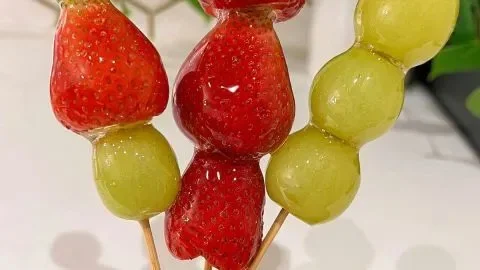
Tanghulu
Ingredients
Method
- Wash the fruit carefully and pat them dry with a towel. Remove any leaves, stems, or other inedible parts.
- Place the prepared fruit onto skewers, ideally using 3 pieces of fruit or less per skewer.
- In a small pot, heat the sugar and water over low to medium heat without stirring. Bring it to a boil and let it simmer for about 10-20 minutes until the syrup thickens and turns amber.
- To check if the syrup is ready, drizzle a spoonful into an ice water bath. If it hardens quickly and cracks when bent, it’s ready.
- Quickly dip each fruit skewer into the syrup, swirling to coat evenly. Immediately dip the skewer into the ice water bath to cool and harden the sugar coating.
- Repeat the process with the remaining fruit, working fast to prevent the sugar from burning.
- Serve Tanghulu as a fun snack at parties or as a sweet treat after meals, either on a platter or individually wrapped.